
Fast-moving consumer goods (FMCG) companies are expected to report mid-single-digit revenue growth in the July-September 2025-26 quarter, according to their quarterly updates. Most companies also noted that supply chains were focused on liquidating existing stock ahead of the implementation of new goods and services tax (GST) rates in categories where the tax was lowered.

'We are targeting a 2.5x to 3x increase in valuation by FY31.'
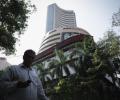
Analysts predict continued volatility in Indian equity markets due to domestic macroeconomic data, F&O expiry, global developments including US tariff policies, and geopolitical tensions.

Foreign portfolio investors (FPIs) withdrew a substantial amount from Indian equities in the first half of March, driven by geopolitical tensions, rupee depreciation, and concerns about crude oil prices.

Companies from Nestle and ITC to Hindustan Unilever and Patanjali have pledged to reduce use of unhealthy ingredients by five to 50 per cent

Godrej Consumer Products Ltd (GCPL) delivered a robust Q4FY26 performance, with steady demand in India and signs of stabilisation in international markets, despite persistent inflationary pressures. The company expects to maintain profitability in FY27 through strategic cost management and pricing adjustments.

Benchmark equity indices Sensex and Nifty extended their gains for the third straight session on Wednesday, driven by last-hour buying in bank, metal, and FMCG shares.

West Asia conflict triggers sharp sell-off in Indian markets, with realty, banking and auto stocks leading losses amid energy shock fears.
FPIs net sold equities worth Rs 1.7 trillion in 2025 -- the highest annual net sale on record.

Indian stock market benchmarks Sensex and Nifty rebounded by over 1% on Monday, driven by value-buying in banking stocks after a three-day slump. Key gainers included UltraTech Cement, HDFC Bank, and Mahindra & Mahindra.

The FMCG industry in India achieved a 10.6% growth in value terms in the December quarter of 2024, driven largely by rural markets, which have surpassed the large urban markets in growth for the fourth consecutive quarter. Festive demand and consumption-driven growth played a key role, with overall volume up 7.1% despite inflationary pressures. However, the industry also saw a "preference shift of consumers towards smaller packs" due to high food inflation. Local manufacturers continue to outperform larger FMCG companies, fueled by consistent volume growth.

Stock markets closed higher on Friday after the Reserve Bank of India kept its benchmark interest rate unchanged as expected and proposed allowing banks to lend to Real Estate Investment Trusts (REITs) with certain prudential safeguards to deepen the financing pool for the real estate sector.

10 stocks from the Nifty 200 index that offer good growth potential and scope to deliver decent returns from current levels, based on brokerage estimates.

'It's harder to attract women initially, but once they come in, retention is significantly higher.'

'The problem is not just slower growth, but also the quality of growth.'

IndusInd Bank, Nestle, UltraTech Cement, Mahindra & Mahindra, Power Grid, Asian Paints, Sun Pharma and Tech Mahindra were also among the laggards. Bajaj Finance, Bharti Airtel, ICICI Bank, Adani Ports and HCL Tech were among the gainers.

The Reserve Bank of India's (RBI's) caution on inflation, highlighted during the recent monetary policy meeting, may put investors' faith in fast moving consumer goods (FMCG) stocks to test, analysts said. They, however, believe FMCG stocks may ride through this near-term investor anxiety as related companies are, typically, well-equipped to handle inflation due to their pricing power and steady demand for essential goods.
Indian equity markets closed higher, driven by gains in PSU bank, auto, and financial stocks, following the US Supreme Court's decision on tariffs. Sensex climbed 479.95 points to 83,294.66, and Nifty advanced 141.75 points to 25,713.
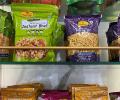
The process of merging Haldiram's Nagpur and Delhi branches to form Haldiram Snacks Food Private Ltd has been completed, informed its CEO Krishan Kumar Chutani on the social media platform LinkedIn. "A new chapter begins in the Haldiram story, and it's a significant one," Chutani posted on LinkedIn on Monday.

The fiscal tilt towards capex benefits companies in investment-related sectors like capital goods, defence equipment, engineering & construction and metal & mining. The planned cut in revenue expenditure will weigh on companies in consumption sectors like FMCG, consumer durables and retail.

Hit by inflation, higher input costs and pricing measures, fast-moving consumer goods companies are expected to see a contraction in their gross margin and a modest-to-flat operating profit in the October-December quarter. Several FMCG makers are likely to log a low single-digit rise in their revenue, returning to the cycle of value-driven growth.

FMCG major Hindustan Unilever Ltd (HUL) on Thursday reported a two-fold jump in consolidated net profit to Rs 6,603 crore in the December quarter of FY'26, on a year-on-year basis, driven by a one-off positive impact from the demerger of its ice cream business.

Around 73 per cent of employers interviewed intend to hire freshers during January-June 2026, with recruitment decisions mainly driven by internships and real-world project experience rather than academic credentials alone, a report said on Wednesday. Nearly 3 in 4 employers (73 per cent) intend to hire freshers during January-June this year, marking a 3 per cent increase over the previous half-year, according to TeamLease EdTech Career Outlook Report HY1 2026.
Stock markets closed higher for the second straight session on Tuesday, driven by gains in bank, IT and capital goods shares.

A growing preference for convenience products and hybrid media consumption, and a surge in digital engagement have led to a rise in the average basket size for fast-moving consumer goods (FMCG) among rural consumers. The average of the rural FMCG basket saw a 60 per cent rise from 5.8 in 2022 to 9.3 in 2024 as it expanded to include convenience products like ready-to-eat packages and beverages, stated the fifth edition of the Rural Barometer Report, brought out jointly by GroupM and Kantar, which surveyed 4,376 rural adults across 20 states.

Leading FMCG companies reported a decline in margins in the September quarter on account of higher input costs and food inflation, which ultimately slowed down the pace of urban consumption. Rising prices of commodity inputs such as palm oil, coffee and cocoa were also accentuated and some FMCG firms have hinted at a price hike. HUL, Godrej Consumer Products Ltd (GCPL), Marico, ITC, and Tata Consumer Products Ltd (TCPL) have expressed concerns over squeezing urban consumption, which according to industry experts forms 65-68 per cent of FMCG total sales.

Fast-moving consumer goods (FMCG) companies are expected to witness pressure on volumes in the October-December quarter. However, price hikes will help push up revenues, said brokerages.For India's largest engineering firm, Larsen and Toubro (L&T), the analysts expect a 20 per cent growth in consolidated revenue, and an 8.1 per cent core business Ebitda margin, up 40 bps from a year ago.
Fast-moving consumer goods (FMCG) distributors' association has written to the finance ministry, highlighting concern over fund utilisation and fund accumulation by quick commerce companies and deep discounting of goods on their platforms. According to a recent letter seen by Business Standard, All India Consumer Products Distributors Federation (AICPDF) noted that its analysis indicated that approximately 80 per cent of these funds were directed toward customer acquisition strategies instead of creating cutting-edge innovations or sustainable growth models for the retail sector.

India's Diwali sales touched a record Rs 6.05 lakh crore -- comprising Rs 5.40 lakh crore in goods and Rs 65,000 crore in services -- buoyed by the recent GST reform and strong consumer sentiment, traders' lobby CAIT said on Tuesday. The Confederation of All India Traders (CAIT) based its findings on a nation-wide survey across 60 major distribution centres including state capitals and Tier 2 & 3 cities conducted by its research wing.
Big, listed FMCG (fast-moving consumer goods) companies such as Hindustan Unilever, ITC, Nestl, and Britannia have been top-performing stocks on the bourses in recent weeks. The Nifty FMCG index, which tracks the share prices of the country's top 15 listed FMCG companies, is up 1.9 per cent month-to-date in May compared to a 2.4 per cent decline in the benchmark Nifty 50 in the period.

Shares of Reliance Industries Limited (RIL) tumbled on Tuesday, posting its biggest single-day decline in 19 months, amid controversy over its purchase of Russian oil and profit-booking after recent gains.

With the music industry pushing for growth in the paid subscription segment, Universal Music India anticipates that the Indian market will mature, potentially becoming a highly impactful paid market for music over the next five years.
The fast-moving consumer goods (FMCG) sector has underperformed the Nifty over the past year as its 20 per cent return is trumped by 29 per cent of the benchmark index. The FMCG index saw a 2.2 per cent drop in the last session, while the Nifty lost 1 per cent. FMCG is seen as a defensive segment. The demand for staples like personal care products, groceries and snacks tend to be stable. FMCG companies are consistent dividend-payers.

Godrej Consumer Products (GCPL) had a disappointing third quarter (Q3FY25) with flat volumes (after 7 per cent growth H1FY25). Price hikes will be required to maintain margins to offset the cost of palm oil inflation. However, some analysts see Q3 as an exception with strong volume growth expected to resume and it may be the fastest growing FMCG player in FY26.

Advertisers will pay 18 lakh to 25 lakh per 10 seconds, a 10% to 20% increase over the last Asia Cup final.
Leading FMCG firms reported a nearly two-fold increase in the share of quick commerce within their total e-commerce sales, and this surge is anticipated to continue, said a joint report by Deloitte and industry body FICCI. Quick Commerce, also known as hyperlocal delivery, is now reaching around 35 per cent of online sales and has become a preferred channel for urban consumers. "About 18 per cent of consumers prefer purchasing food and beverage items from Q-commerce channels.

'When markets go into a budget with excessive optimism, the risk of disappointment is higher.'

'Indian markets may underperform global peers for the next two quarters.' 'But beyond that, India should catch up and resume its long-term growth path.'

From the 30 Sensex firms, IndusInd Bank, Asian Paints, Hindustan Unilever, Tata Motors, Tata Steel, Titan, Reliance Industries and NTPC were among the major laggards. Tech Mahindra, Mahindra & Mahindra, Kotak Mahindra Bank, Infosys, HCL Technologies and State Bank of India were among the major gainers.
India's fast-moving consumer goods (FMCG) sector witnessed growth in rural consumption in volume terms outpace urban consumption for the first time in five quarters, in the January-March period. According to a report from consumer intelligence firm NIQ, rural consumption grew at a rate of 7.6 per cent year-on-year (Y-o-Y) in Q1CY24, overtaking that in urban areas which stood at 5.7 per cent.
